Wednesday, 15 July 2015

Nigeria Relations with International Organizations http://www.photius.com/countries/nigeria/government/nigeria_government_relations_with_inter~10033.html Sources: The Library of Congress Country Studies; CIA World Factbook


Nigeria played active roles in various international organizations and vied for positions in them. For example, Joseph Garba, Nigeria's former permanent representative to the UN, was elected in 1989 to a one-year term as president of the UN General Assembly; Adebayo Adeedji was
executive secretary of the Economic Commission for Africa, a UN affiliate; and Emeka Anyaoku became secretary general of the Commonwealth of Nations in 1989. Former military head of state Obasanjo also had become a recognized world statesman and spokesman on African issues. Nigeria contributed personnel to many UN peacekeeping missions, including operations in Congo, Tanzania, and the UN India/Pakistan Observer Mission in the 1960s, the UN Interim Force in Lebanon in 1978, and UN forces observing the Iran-Iraq cease-fire and the Angola Namibian accords in 1988.
The importance that Nigeria placed on international organizations grew out of a striving for peace and international cooperation. In the cases of the OAU and ECOWAS, these organizations also served to increase African unity, another important Nigerian goal. Nigeria played an initiating role in the creation of both organizations and was active in both thereafter. Although Nigeria's positions on various issues have changed over the years, its level of activity in international organizations has increased.
In 1987 Nigeria initiated a Concert of Medium Powers, more widely known as the Lagos Forum, to facilitate multilateral cooperation and to enable member states to exert greater collective influence on world affairs. Forum members included Sweden, Austria, Zimbabwe, and Egypt. The initiative, which could be seen as an effort preceding the end of the Cold War, seemed to collapse, however, after its initiator, Boleji Akenyemi, was removed as minister for external affairs in 1987.
* * *
A wide range of books and articles exists on Nigerian government and politics. On the colonial period and the First Republic (1960-66), the major studies are those by Eme O. Awa, Federal Government in Nigeria; James Smoot Coleman, Nigeria: Background to Nationalism; Larry Diamond, Class, Ethnicity, and Democracy in Nigeria: The Failure of the First Republic; Billy J. Dudley, Parties and Politics in Northern Nigeria; Robin Luckham, The Nigerian Military: A Sociological Analysis of Authority and Revolt: 1960-67; J.P. Mackintosh, Nigerian Government and Politics; Kenneth W.J. Post, The Nigerian Federal Election of 1959; Richard L. Sklar, Nigerian Political Parties; and C. Sylvester Whitaker, The Politics of Tradition: Continuity and Change in Northern Nigeria, 1946-66.

On the Gowon government (1966-75), there are major studies by Henry Bienen, Political Conflict and Economic Change in Nigeria; Billy J. Dudley, Instability and Political Order; Oye Oyediran, Nigerian Government and Politics Under Military Rule, 1966-79; and S.K. Panter-Brick, Nigerian Politics and Military Rule: Prelude to the Civil War. A.H.M. Kirk-Greene's two-volume Crisis and Conflict in Nigeria: A Documentary is a valuable resource on the civil war period. There are also excellent studies by John J. Stremlau, The International Politics of the Nigerian Civil War, 1967- 1970, and by John de St. Jorre, The Nigerian Civil War.

On the Obasanjo government and the transition to the Second Republic, the central studies are those by J. Bayo Adekson, Nigeria in Search of a Stable Civil-Military System; Larry Diamond et al., Democracy in Developing Countries; Richard A. Joseph, Democracy and Prebendal Politics in Nigeria: The Rise and Fall of the Second Republic; and Shehu Othman, "Classes, Crises, and Coups: The Demise of Shagari's Regime."

Overviews on Nigerian politics and government can be found in Peter P. Ekeh and E.E. Osaghae, Federal Character and Federalism in Nigeria and William Graf, The Nigerian State. (For further information and complete citations, see Bibliography.)
Data as of June 1991


NOTE: The information regarding Nigeria on this page is re-published from The Library of Congress Country Studies and the CIA World Factbook. No claims are made regarding the accuracy of Nigeria Relations with International Organizations information contained here. All suggestions for corrections of any errors about Nigeria Relations with International Organizations should be addressed to the Library of Congress and the CIA.

Tuesday, 14 July 2015

Son of Boston Police Captain Arrested as Possible Terrorist Adams, Mass. — By MICHELE McPHEE, BRIAN EPSTEIN and BRIAN ROSS


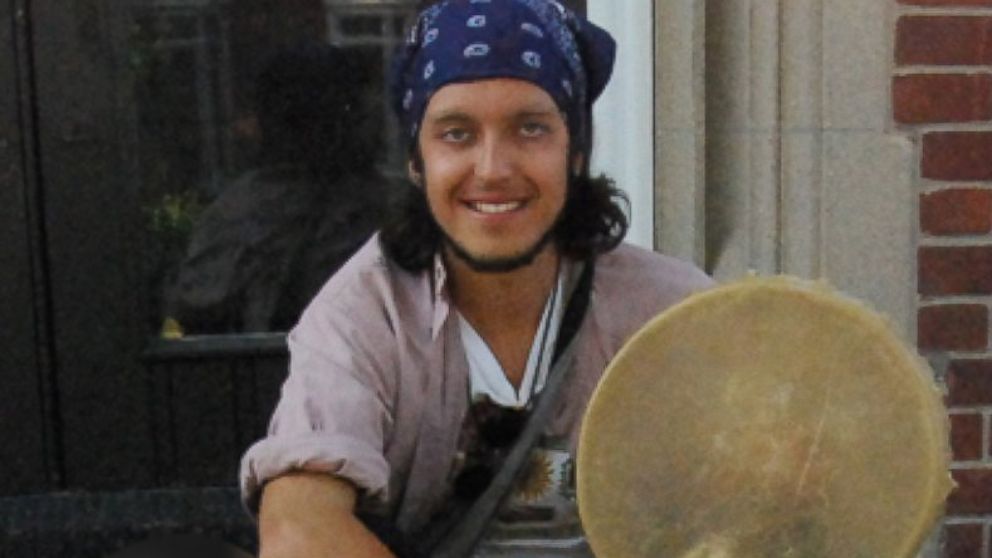
PHOTO: Alexander Ciccolo participates in "peace walk" in 2012.

The estranged son of a respected Boston police captain was arrested July 4 by FBI agents as part of a counter-terrorism operation against alleged ISIS-inspired domestic terrorists, federal officials told ABC News today.
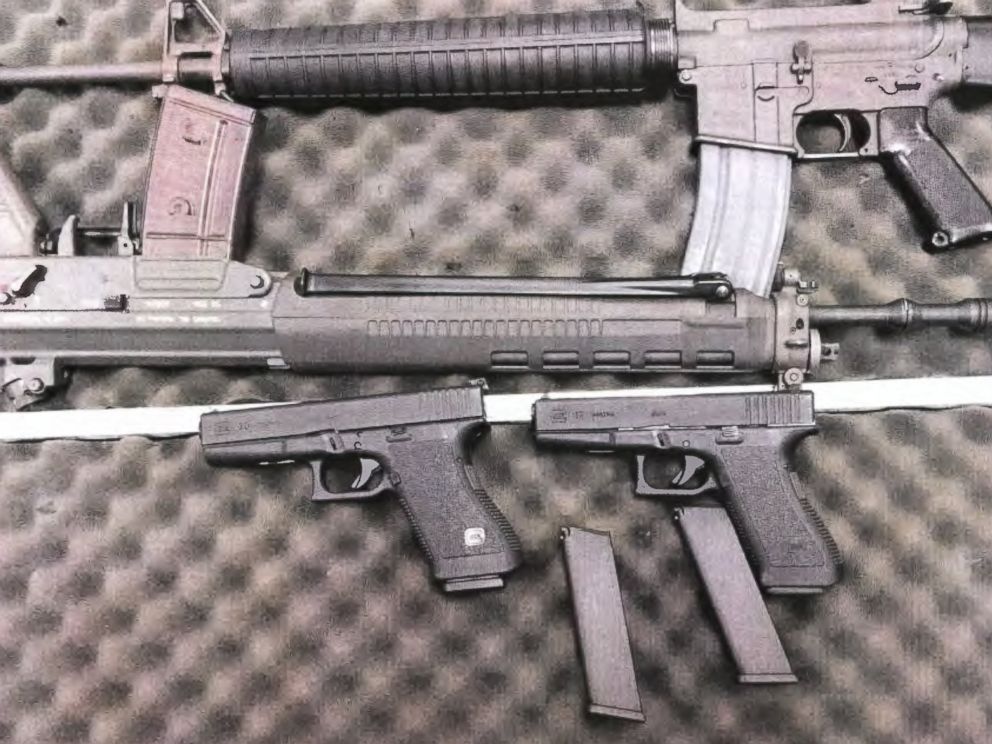
Alexander Ciccolo, 23, of Adams, Mass., was taken into custody on gun charges after buying two pistols and two rifles from an undercover FBI confidential informant, federal officials said. In a search of his apartment, officials reported they found it loaded with possible bomb-making equipment including a pressure cooker, a variety of chemicals, an alarm clock, along with “attack planning papers” and “jihad” paperwork. FBI agents said he used the name Abu Ali al-Amriki and neighbors said he was a recent convert to Islam.
“This is a very bad person arrested before he could do very bad things,” one senior federal official briefed on the arrest told ABC News.


PHOTO: A photo of weapons allegedly purchased by Alexander Ciccolo was entered into evidence.PHOTO: A photo of weapons allegedly purchased by Alexander Ciccolo was entered into evidence.

An FBI affidavit said Ciccolo initially planned to travel to “another state” and use a pressure cooker bomb “to conduct terrorist attacks on civilians, members of the U.S. military and law enforcement personnel.” The FBI said the attack location was later changed to a town with a state university and would be concentrated on “college dorms and cafeteria, to include executions of students, which would be broadcast live via the internet.”
Ciccolo’s father is Boston police Captain Robert Ciccolo, a veteran commander assigned to Operations at Boston Police headquarters who was one of those to respond to the deadly Boston Marathon bombing in April 2013. According to the FBI, the younger Ciccolo said he was “inspired” by the Marathon bombing and the use of pressure cooker bombs, and told the FBI undercover operative, “Allahu Akbar!!! I got the pressure cooker today.”
Law enforcement officials said Capt. Ciccolo alerted counter-terrorism authorities about a year ago that his son, with whom he had had minimal contact for several years, “was going off the deep end” and “spouting extremist jihadist sympathies.”
According to the affidavit of an FBI agent, the younger Ciccolo recently stated that he is, “not afraid to die for the cause," and that he characterized America as ”Satan” and “disgusting.”
Capt. Ciccolo did not respond to a request for comment but late Monday the Ciccolo family posted a statement on the Boston Police Department's website.
"While we were saddened and disappointed to learn of our son's intentions, we are grateful that authorities were able to prevent any loss of life or harm to others," the statement reads. "At this time, we would ask that the public and the media recognize our grief and respect our desire for privacy." 


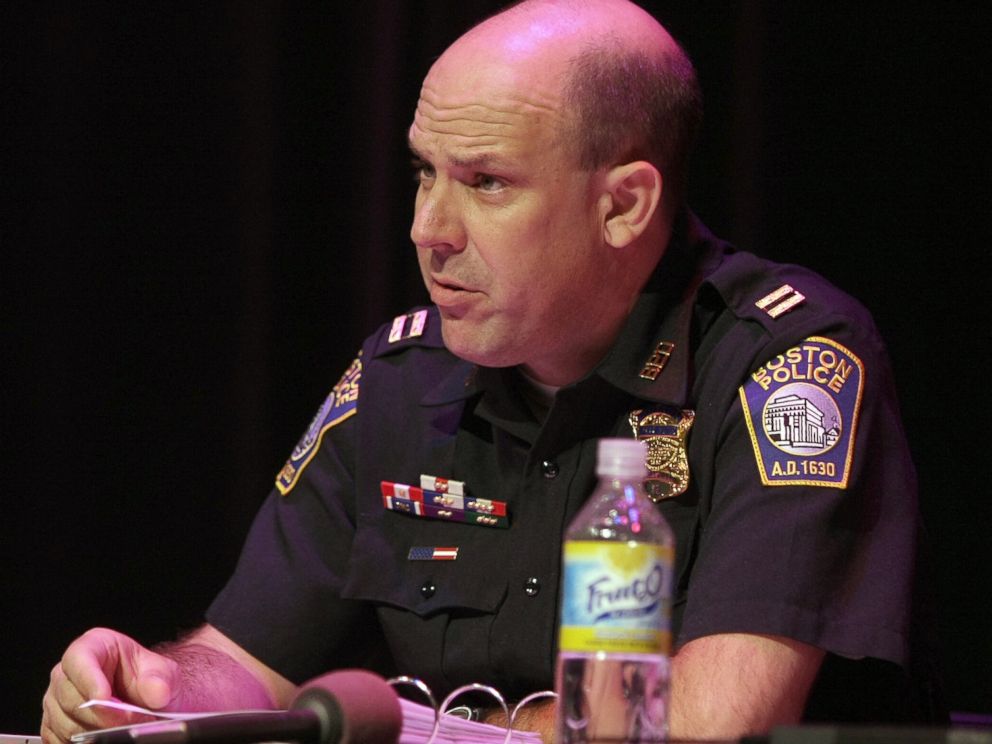
PHOTO: Boston cab drivers rallied before attending a hearing, chaired by Capt. Robert Ciccolo, with Boston Police Hackney Division at Roxbury Community College regarding a proposed fare increase on June 24, 2015 in Boston. 
PHOTO: Boston cab drivers rallied before attending a hearing, chaired by Capt. Robert Ciccolo, with Boston Police Hackney Division at Roxbury Community College regarding a proposed fare increase on June 24, 2015 in Boston.


According to the FBI affidavit, Ciccolo posted a photo of a dead American soldier and wrote, “Thank you Islamic State. Now we won’t have to deal with these kafir back in America.” Kafir is a reference to non-believers of Islam. In a meeting with an FBI cooperating witness, Ciccolo praised the recent terror attack on a beach resort in Tunisia that killed 39 people, according to the FBI affidavit. “Awesome. Awesome, you that ah, that brother in Tunisia was impressive,” Ciccolo allegedly said.
The younger Ciccolo is scheduled to be in court in Springfield, Massachusetts Tuesday morning for a detention hearing. He was quietly arraigned last Monday on the gun charges, according to documents filed in federal court today. Ciccolo has been held at the Wyatt federal lockup in Rhode Island since his arrest. 


PHOTO: Federal agents search a home in Adams, Mass. on July 4.PHOTO: Federal agents search a home in Adams, Mass. on July 4.


Last week FBI Director James Comey said agents had arrested more than 10 people with suspected ties to ISIS and that the busts foiled planned Fourth of July attacks.
“I do believe that our work disrupted efforts to kill people, likely in connection with July 4th,” Comey said.
Ciccolo’s arrest was among the ones that interrupted a planned attack, the officials said.
Prior to allegedly becoming an ISIS sympathizer, Ciccolo was photographed attending an anti-nuclear "peace walk" in 2012.
Jun Yasuda, a Buddhist who walked with Ciccolo in July 2012, told ABC News Ciccolo appeared to be “concerned about peace… and understood about non-violent protest.”
“We walked together after Fukushima, and he realized that he had an open mind and that people were wonderful,” Yasuda said.
Michele McPhee is a Boston-based freelance journalist and frequent contributor to ABC News. ABC News' Alexander Hosenball contributed to this report.


 Alexander Ciccolo participates in a peace walk in 2012. 


 Alexander Ciccolo participates in a "peace walk" in 2012.

Breast cancer warning to older women


Many older women are unaware of some of the early warning signs of breast cancer, according to a survey.
Fewer than half of the women over 70 who were questioned could name a symptom, apart from a lump.
The government health agency, Public Health England, which organised the survey, said that older women were also more likely to delay going to their GP.

About one in three women diagnosed with breast cancer each year are aged 70 or over.
A campaign by Public Health England, called Be Clear on Cancer, is urging older women to visit their doctor if they notice breast changes, such as a lump or a change to the nipple, skin or the shape of the breast.
Jenny Harries of Public Health England said: "We want women 70 and over to be aware of their breasts and to recognise any changes, report any new symptoms and just remember that you're not past it when it comes to breast cancer."
Figures show that about 9,500 women die every year from breast cancer and over half of these women (5,400) are aged over 70.
Sara Hiom, Cancer Research's director of early diagnosis, said: "This campaign highlights two important facts that aren't well known - that breast cancer isn't just about lumps, and that older women are most at risk."
"We hope these latest Be Clear on Cancer adverts will encourage women, especially older ones, to tell their GP about any unusual or persistent changes to their breasts, be that a lump, or something else like discharge, or a change to the skin or nipple.
"An early diagnosis, regardless of age, usually makes breast cancer more treatable," she added.

Extended screening

The survey from Public Health England questioned 731 women aged over 40 in England.

When asked to name symptoms of breast cancer, only 48% of women over 70 could name a symptom other than a lump.
Women aged under 50 and over 70 are not included in the national breast screening programme, but a trial is investigating the merits of extending screening to women aged 47-49 and 71-73.
Breast cancer is the most common cancer in women in England, with about 41,000 women diagnosed each year.

'Softener' may help kill cancers


SPL

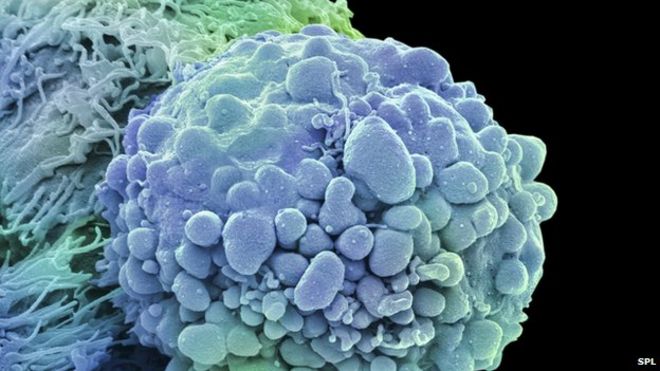
It may be possible to "soften-up" cancers before hitting them with chemotherapy drugs, researchers suggest.

A study, published in the Cancer Cell, uncovered how tumours can become resistant to commonly used drugs.
The University of Manchester team suggest drugs already in development may be able to counter this resistance to make chemotherapy more effective.
The approach has not yet been tested in people.
The team were looking at a class of drugs called taxanes, which are used to treat a range of cancers including breast and ovarian.
The research group at the University of Manchester were trying to determine how taxanes work.
By studying cancerous cells growing in the laboratory they were able to show how the class of drugs trigger cancer cells to kill themselves.

Resistance

But at the same time they discovered a key difference between cancers that were susceptible to the drugs and those which were inherently resistant, or later developed resistance.
The found high levels of one protein, known as Bcl-xL, in those cells that were resisting treatment.
But drugs are in development which can neutralise Bcl-xL's effects.
One of the researchers, Prof Stephen Taylor, told the BBC News website: "Potentially combining this with taxanes you could take resistant [cancers] and make them sensitive.

"These new inhibitors would essentially soften-up the cancer cells so when they are treated they are more likely to die."
The team want to test their approach on samples of a patient's cancer as well as in animals studies.
One concern will be whether making cancers more vulnerable to chemotherapy would also make healthy tissue more vulnerable and increase the risks of side effects.
Dr Emma Smith, senior science information officer at Cancer Research UK, said: "In cases where patients don't benefit from taxane-based chemotherapy, doctors could add drugs that target Bcl-xL to overcome cancer's defences.
"It's still early days for this research but, if the results are confirmed in clinical trials, it has the potential to improve treatment for thousands of cancer patients."

HIV: UN meets goal to treat 15 million-By Michelle Roberts Health editor


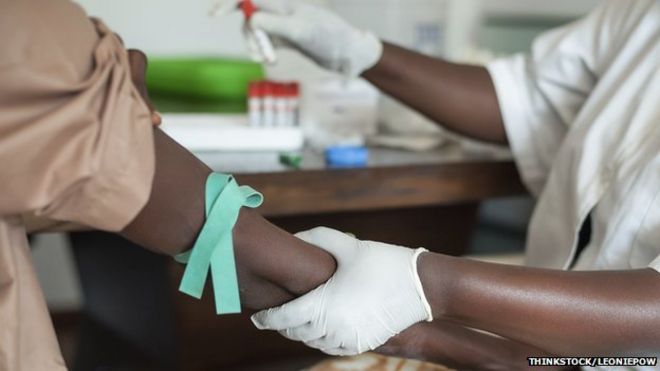
Drawing blood
The goal to get HIV treatment to 15 million people by the end of 2015 has already been met, says the United Nations Aids agency.
The landmark figure was reached in March - nine months ahead of schedule.

It follows decades of global efforts and investment to get antiretroviral drugs to those in need - such as people living in sub-Saharan Africa.

In 2000, when the UN first set goals to combat HIV, fewer than 700,000 people were receiving these vital medicines.

According to UN Aids, which has a report out today, the global response to HIV has averted 30 million new HIV infections and nearly eight million Aids-related deaths since the millennium.

Over the same time frame, new HIV infections have fallen from 2.6 million per year to 1.8 million, and Aids-related deaths have gone down from 1.6 million to 1.2 million.

Meanwhile, global investment in HIV has gone up from £3.1bn ($4.8bn) in 2000 to more than £13bn ($20bn) in 2014.

And concerted action over the next five years could end the Aids epidemic by 2030, says UN Aids.
But progress has been slower in some areas.

Ending Aids

A major gap seems to be in awareness of HIV status, which is the biggest barrier to treatment access, says the report.

And treatment access for children has lagged behind adults - although this is now improving.

The proportion of children living with HIV who receive antiretroviral therapy almost doubled between 2010 and 2014 (from 14% to 32%), but coverage "remains notably lower than it does for adults", says the report.
Even though new HIV infections have gone down, there is still an unacceptable number of new HIV infections each year, contributing to the burden of the epidemic.

In 2014, sub-Saharan Africa accounted for 66% of all new HIV infections. And at the last headcount, there were an estimated 25.8 million people in this region living with HIV. The estimated count for the whole world was 36.9 million.

This year sees the switch from Millennium Development Goals to broader Sustainable Development Goals.
Ban Ki-moon, Secretary General of the United Nations said: "The world has delivered on halting and reversing the Aids epidemic.

"Now we must commit to ending the Aids epidemic as part of the Sustainable Development Goals."
The report says the next five years will be critical and recommends front-loading investment to "sprint" towards an ambition of ending the Aids epidemic by 2030.

Israel not bound by deal with Iran - Netanyahu

"Israel is not bound by this deal with Iran because Iran continues to seek our destruction. We will always defend ourselves."


    Israeli Prime Minister Benjamin Netanyahu said on TuesdayIsrael would not be bound by the nuclear deal between world powers and Iran and would defend itself.

    Appearing before the television cameras to make a statement in which he underlined Israel's disappointment in the deal that he described as a "stunning, historic, mistake", he said:

    "Israel is not bound by this deal with Iran because Iran continues to seek our destruction. We will always defend ourselves

    Buhari promises to honour all international trade agreements


    President Muhammadu Buhari on Tuesday promised that his administration will honour all international trade agreements that will directly improve the living conditions of Nigerians.


    A statement by his Special Adviser on Media and Publicity, Mr. Femi Adesina, quoted the President as speaking during an audience he had with the outgoing Ambassador of Turkey to Nigeria, Mr. Mustafa Pulat.

    Buhari said under his leadership, the Federal Government would give special attention to the implementation of such agreements, especially in the provision of infrastructure, good education and job opportunities.

    Commending the Ambassador’s efforts to expand areas of bilateral cooperation between Nigeria and Turkey, Buhari applauded the growth of trade between both countries in recent years.

    “I am impressed with the improvement in our trade relations which coincided with the period you arrived in Nigeria.

    “As we settle down into governance, we will look into other areas in which we can work together and directly help
    our people,” Buhari reportedly assured Pulat.

    The President also praised the outgoing Ambassador’s positive impact on education in Nigeria as reflected in the increased number of Turkish schools and universities in Nigeria.

    Pulat told the President that during his two and half years in Abuja, he focused on ensuring better cultural, educational and trade relations between Nigeria and Turkey.